


How we work
Human responsibility. AI execution. Visible checks.
Business priorities, UX, architecture and acceptance guide the work. AI agents implement defined tasks and can execute approved operational steps. Human decisions remain explicit from discovery to release and continuing improvement.
Human decisionAI executionVisible check
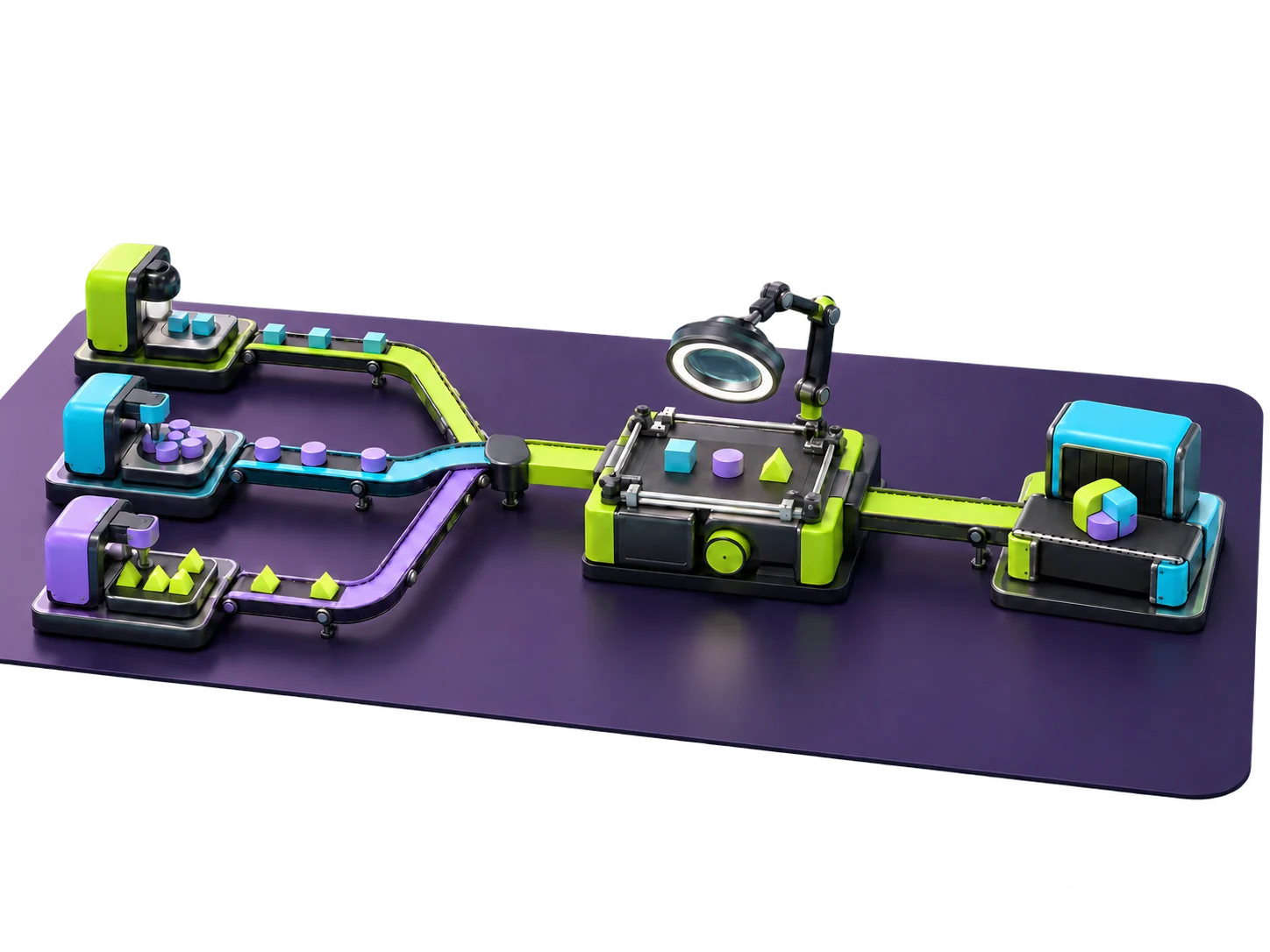
Five stages, with human decisions explicit
Understand & agree
Identify the users, business task, existing systems and constraints. Agree scope, permitted actions and acceptance evidence. A defined software project can proceed directly to project scoping; a task pilot is useful when the benefit needs evaluation.
Design the experience & architecture
Shape UX, domain boundaries, modular components and interfaces around the expected load, integrations and change needs. Make trade-offs in capacity, risk and operating cost explicit.
Build & coordinate
Give agents defined implementation or workflow tasks, appropriate context and clear permissions. Record handoffs, results and unresolved questions.
Review, test & release
Automated unit, integration and regression tests check agreed behaviour and user journeys. AI assists with test work; independent AI review provides a separate assessment. Human operators review experience and acceptance evidence and remain responsible for release decisions. Agents can execute deployment steps within an approved workflow.
Operate & improve
Monitor agreed systems and workflows, handle exceptions and maintain useful software. Propose bounded improvements, evaluate them against the agreed baseline and decide whether to retain, adapt or revert them. Continuing work has its own scope.
Code Operator — our internal delivery method
Our internal delivery method connects clear roles, shared context, defined AI tasks, recorded handoffs and independent review. The agentic harness and Devbus support this work; review principles from Four-Eyes Delivery R&D also inform the approach.
Clear milestones, decisions and next steps.
We agree how milestones, demonstrations, decisions and blockers will be shared. Each review should make progress clear and identify the next useful action. We are planning our own client project workspace with AI integration, bringing tasks, milestones, demonstrations, blockers and decisions together.
Architecture designed for growth and change
Clear interfaces, modular components and explicit integration boundaries help a system evolve. We define capacity assumptions, operating constraints and acceptance checks for the actual project, then revisit them as needs change.
Capacity and operating costs are assessed for your expected workload.
Agreed continuation
Operate & Improve
Keep accepted software and workflows useful through agreed monitoring, maintenance, exception handling and improvements. CMS, social and business-process tasks can be included where their inputs, permitted actions and human decisions are defined.
Availability, responsibilities and commercial terms are agreed for the continuing scope.
Plan ongoing operation and improvement